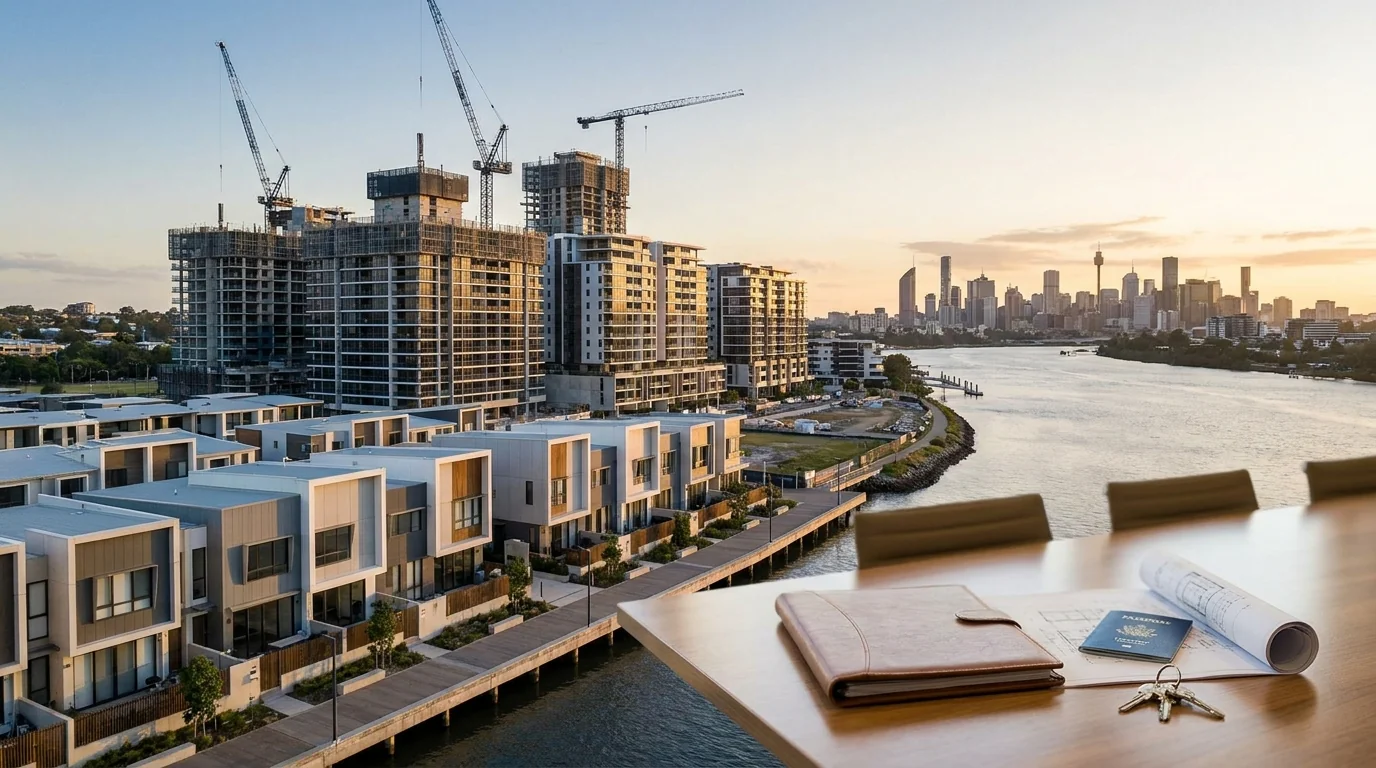
The Australian Government significantly increased the costs for foreign persons purchasing established residential dwellings, with the Foreign Acquisitions and Takeovers Amendment (Residential Property) Act 2024 tripling application fees and doubling vacancy fees. While a blanket two-year ban was proposed, the Foreign Investment Review Board currently focuses on discouraging the purchase of existing stock through higher financial barriers. However, the current framework contains deliberate gaps, and build-to-rent developments represent one of the most attractive exceptions for overseas capital.
For foreign investors willing to commit to long-term rental housing, the rules actually became more favourable. Reduced application fees and explicit approval pathways now exist for qualifying BTR projects. This represents a clear policy signal: Australia wants foreign money directed toward increasing housing supply rather than competing with local buyers for existing stock.
What the Foreign Investment Review Board Allows Under Current Restrictions
The established dwelling restrictions target a specific problem: foreign buyers purchasing homes that Australian residents could otherwise occupy. The exceptions all share one characteristic. They require the foreign investment to add housing rather than simply transfer ownership of existing properties.
Three main exceptions apply:
- Purchasing established dwellings for redevelopment that creates at least one additional home
- Acquiring properties that support commercial-scale housing availability (retirement villages, aged care facilities, student accommodation)
- Buying qualifying build-to-rent developments
Of these, BTR projects offer the most straightforward path for institutional investors and well-capitalised individuals seeking residential land acquisition opportunities in Australia.
Qualifying Criteria for Build-to-Rent Developments
The Foreign Acquisitions and Takeovers Act 1975 and its regulations set specific requirements for BTR eligibility. Meeting these criteria unlocks both the exception to the dwelling restrictions and access to reduced FIRB application fees.
A development qualifies as an eligible BTR project when it satisfies all of the following:
- Contains at least 50 dwellings (or will contain 50 once completed)
- Each dwelling is available for rent to the general public
- Tenants receive lease terms of at least three years, though they can request shorter periods
- A single entity owns all dwellings at all times
- At least 10% of dwellings are affordable housing as defined under the Income Tax Assessment Act 1997
The 50-dwelling minimum and single ownership requirement mean these rules target institutional investors rather than individuals buying a handful of apartments. The three-year lease term requirement reflects the government's intent to create stable, long-term rental housing rather than short-stay accommodation.
Student accommodation, land lease communities, and retirement villages do not count toward BTR eligibility. These property types have separate treatment under foreign investment rules.
The Affordable Housing Component
The 10% affordable dwelling requirement deserves attention because it affects project economics. Affordable housing under the Income Tax Assessment Act 1997 means dwellings rented to eligible tenants at below-market rates, with specific income thresholds determining tenant eligibility.
For a 100-unit BTR development, at least 10 apartments must be set aside as affordable housing. This reduces potential rental income but brings tax concessions that partially offset the impact. The FIRB reporting requirements include ongoing compliance verification for the affordable housing component.
Reduced FIRB Fees for BTR Investments
Commercial property foreign investment in Australia typically attracts substantial application fees. FIRB fees are calculated based on the consideration value and are indexed annually. For large acquisitions, fees can reach hundreds of thousands of dollars.
Qualifying BTR developments receive concessional fee treatment. The reduced fees recognise that these investments align with government housing policy and bring social benefits beyond simple capital deployment.
The exact fee reduction depends on the application type and value, but the savings can be material for large-scale developments. Contact us for current fee calculations specific to your proposed acquisition.
Hold Period and Ongoing Conditions
FIRB approval for BTR acquisitions comes with conditions that extend well beyond settlement. Foreign investors cannot simply obtain approval, complete the purchase, and then convert the property to another use.
For land acquired to develop a BTR project, the BTR use must continue for a specified period. Selling individual dwellings or converting the development to strata title within this period would breach the approval conditions. Penalties for non-compliance include substantial fines and potential delete orders.
The single ownership requirement also creates ongoing obligations. A foreign corporation property purchase structure must maintain consolidated ownership throughout the hold period. Corporate restructures that fragment ownership could trigger compliance issues.
Practical Considerations for Foreign Investors
BTR investment in Australia suits particular investor profiles. The minimum 50-dwelling threshold, affordable housing requirements, and hold period conditions mean this is not a path for small-scale investors seeking quick returns.
Institutional investors, sovereign wealth funds, and large private equity groups are the natural participants. These entities can absorb the development timeline, manage the affordable housing obligations, and commit to long-term ownership.
For developers selling off-the-plan to foreign buyers, BTR structures offer a different model. Rather than selling individual apartments to multiple foreign purchasers (each requiring separate FIRB approval), a single institutional buyer can acquire the entire development under one approval.
The Foreign Investment Review Board assesses BTR applications against standard national interest criteria plus the specific BTR eligibility requirements. Applications should include detailed development plans, financial projections demonstrating the affordable housing component, and proposed ownership structures.
Tax and Immigration Considerations
Foreign investment in Australian property involves tax obligations beyond the scope of FIRB approval. State-based surcharges on foreign purchasers, land tax loadings, and income tax on rental returns all affect investment returns. Specific tax advice from qualified accountants is necessary before committing to any acquisition.
For temporary visa holders considering BTR investment as part of a broader Australian residency strategy, immigration advice should come from registered migration agents. FIRB approval does not confer any visa rights or pathway to residency.
This information is general in nature and FIRB rules change frequently. Contact us for advice specific to your situation.