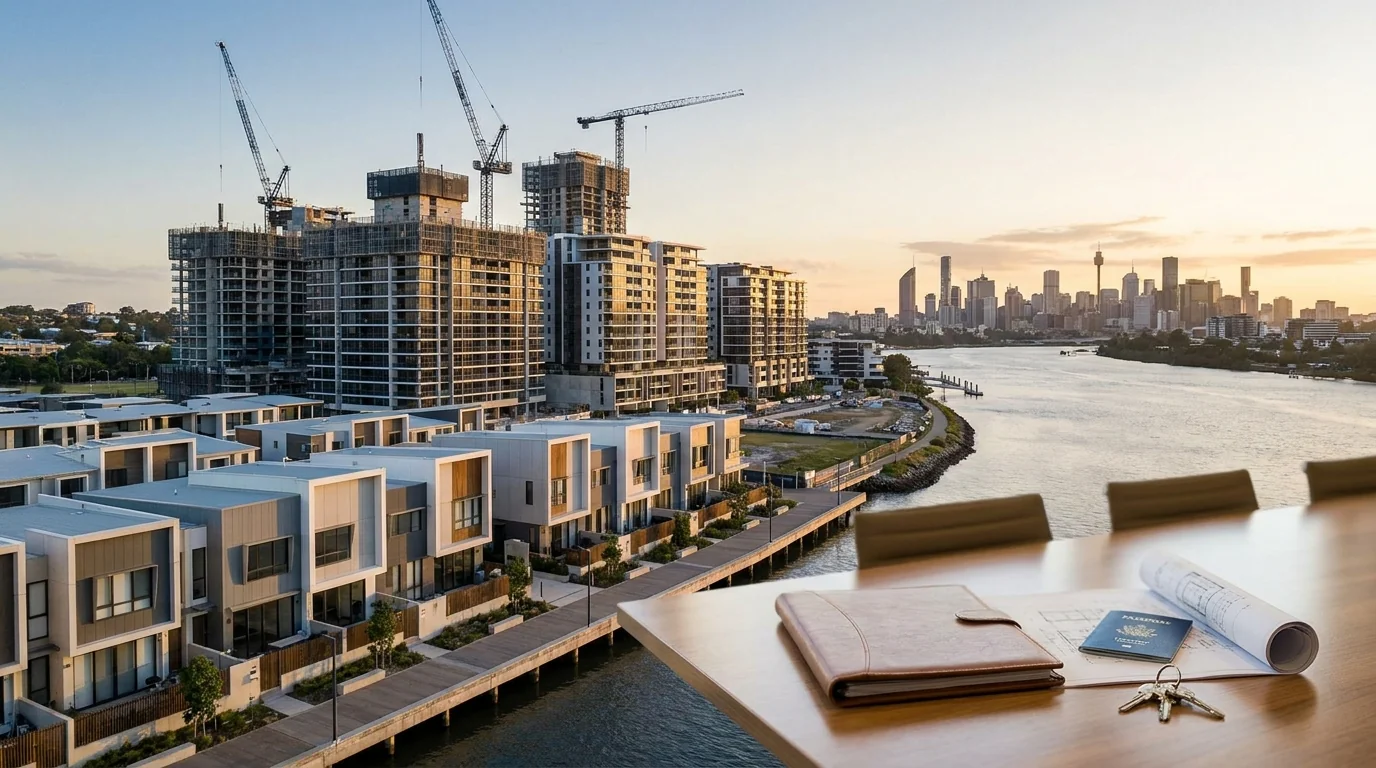
The Federal Government has introduced a temporary ban on foreign persons purchasing an established dwelling in Australia. The ban took effect on 1 April 2025 and runs until 31 March 2027. For temporary visa holders who planned to buy a home to live in, and for overseas investors targeting the Australian property market, this represents a dramatic shift in foreign investment law.
Who Is Affected by the Established Dwelling Ban?
The ban applies to all foreign persons under the Foreign Acquisitions and Takeovers Act 1975. This includes:
- Temporary residents on work visas, student visas, and other temporary visas
- Non-residents living overseas
- Foreign-owned companies and trusts
- Australian companies with foreign ownership above certain thresholds
The most dramatic change affects temporary residents. Before 1 April 2025, a person on a temporary visa could apply to the Foreign Investment Review Board for approval to purchase one established dwelling as their principal place of residence. That option no longer exists during the ban period.
A temporary resident working in Sydney, for example, must now rent or purchase new property. Buying an existing house or apartment in an established suburb is off the table until at least April 2027.
What Qualifies as an Established Dwelling?
An established dwelling is any residential property that has been previously occupied or sold. The category includes:
- Houses, townhouses, apartments and units with prior owners
- Properties that have been rented out
- Dwellings that have been lived in, even briefly
New dwellings are not established dwellings. If you purchase off the plan from a developer, or buy a newly constructed property that has never been occupied, the ban does not apply. Foreign persons can still acquire new residential property with FIRB approval, subject to the usual conditions.
The distinction matters. A two-year-old apartment that has been owner-occupied is an established dwelling. An identical apartment in the same building that was never sold and remains developer stock may not be.
Exceptions That Still Allow Purchase
The government has carved out four exceptions to the ban. Foreign persons can still purchase established dwellings in these circumstances:
Large-Scale Redevelopment Projects
A foreign person may buy an established dwelling if they plan to redevelop the site and the redevelopment will result in at least 20 additional dwellings. The previous threshold was just one additional dwelling. This change means small-scale knock-down-rebuild projects no longer qualify.
A developer purchasing a single house to build a duplex will not receive approval. A developer purchasing multiple properties to construct an apartment building with 25 units may still qualify, provided the net increase is at least 20 dwellings.
Commercial-Scale Housing
Foreign persons can purchase established dwellings where the acquisition supports housing availability on a commercial scale. This includes retirement villages, aged care facilities, and purpose-built student accommodation. The exemption recognises that these asset classes serve different market segments and do not compete directly with family homes.
Build-to-Rent Developments
Existing build-to-rent developments remain open to foreign purchasers. The government has prioritised rental supply, and institutional investment in build-to-rent projects continues to receive favourable treatment under foreign investment law.
Pacific Labour Mobility Accommodation
Foreign-controlled companies employing workers from Pacific island countries and Timor-Leste can purchase established dwellings to house those workers. This exception supports the Pacific Australia Labour Mobility scheme and recognises the accommodation needs of seasonal and temporary workers.
Compliance and Enforcement
The ban coincides with stricter compliance measures. The ATO will conduct a full audit of foreign investors who hold approval for vacant residential land development. If you received FIRB approval to purchase vacant land for residential development, expect scrutiny of your compliance with development conditions and timeframes.
FIRB application fees have also increased. The government has signalled that foreign investment in residential property will attract higher costs and closer oversight during the ban period and potentially beyond.
Penalties for breaching foreign investment rules remain severe. Purchasing an established dwelling without approval, or in breach of the ban, can result in civil penalties, forced divestiture, and criminal prosecution in serious cases.
What This Means for Different Buyers
The practical impact varies depending on your situation.
Temporary visa holders who want to buy a home must now look at new property only. Off-the-plan apartments and house-and-land packages in new estates remain available with FIRB approval. Established homes in established suburbs do not.
Parents overseas buying property for children studying in Australia face the same restrictions. The common arrangement of purchasing an apartment for a student child to live in is no longer possible if the property is an established dwelling.
Overseas investors seeking rental income from Australian property must focus on new stock or the specific exceptions above. Purchasing an existing investment property is not permitted.
Property developers selling to foreign buyers should note that off-the-plan sales of new dwellings remain viable. Recent building approvals data shows dwelling approvals have increased, with private sector dwellings excluding houses rising over 34% in recent months. New supply continues to come to market.
Expats returning to Australia after living overseas may need to check their residency status carefully. An Australian citizen is not a foreign person and is not affected by the ban. An Australian permanent resident who has been living overseas may also be unaffected, depending on their circumstances. Temporary residents and non-residents face the restrictions described above.
After March 2027
The government will review the ban before it expires. Whether restrictions continue will depend on housing market conditions, political priorities, and the perceived effectiveness of the ban in improving housing affordability for local buyers.
Research from the Australian Housing and Urban Research Institute on changed patterns of dwelling demand and supply suggests housing pressures are driven by multiple factors. Foreign investment is one input among many. The government's review will need to assess whether the ban achieved its stated aims.
For now, foreign persons considering Australian property purchases should plan on the basis that the ban will remain in place until at least 31 March 2027.
This information is general in nature and FIRB rules change frequently. Contact us for advice specific to your situation.