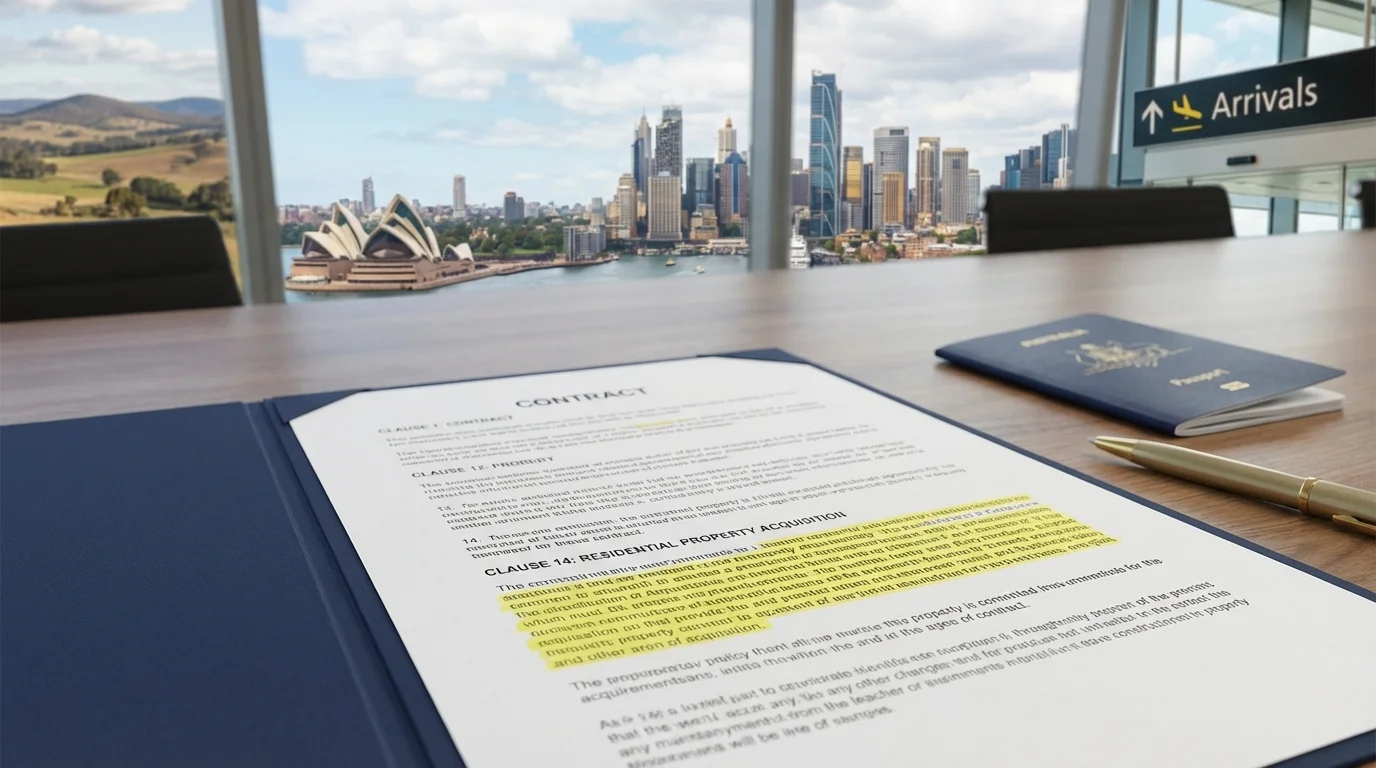
The Foreign Investment Review Board approval process creates unique challenges for property contracts. Unlike standard finance clauses that depend on bank decisions, FIRB approval involves a government regulatory body with its own procedures and timeframes. This distinction shapes how FIRB contract clauses must be drafted.
What a FIRB Subject to Approval Clause Must Include
An effective FIRB special conditions property contract clause addresses several scenarios. First, it must state that the contract is conditional upon the buyer receiving unconditional FIRB approval. Second, it should specify a reasonable timeframe for obtaining that approval. Third, it needs to outline what happens if approval is refused, delayed, or granted with conditions the buyer cannot accept.
Many template clauses fail on the third point. They assume approval is binary, either granted or refused. In practice, FIRB may approve a residential land acquisition with conditions such as development timelines or occupancy requirements. Your clause should address whether conditional approval satisfies the contract or gives you grounds to terminate.
Common Problems We Identify in Contract Reviews
When reviewing contracts for foreign investors, we frequently find these issues:
- Timeframes that expire before FIRB can realistically process the application
- No mechanism to extend the approval period if FIRB requests additional information
- Ambiguous wording about deposit return if the contract terminates
- Failure to address what constitutes satisfactory FIRB approval
- Conflicting provisions between the FIRB clause and other special conditions
Each problem creates risk. Short timeframes force rushed applications. Missing extension provisions leave you in breach if FIRB delays. Ambiguous deposit terms invite disputes with vendors.
State-by-State Contract Considerations
Property contracts vary across Australian states. New South Wales contracts differ from Victorian contracts in structure and standard terms. Queensland uses yet another format. We understand these differences and draft FIRB contract clauses that integrate properly with each state's standard contract form.
For commercial property foreign investment transactions, the contracts are often bespoke documents prepared by the vendor's lawyers. These require careful review to ensure FIRB conditions are properly incorporated and do not conflict with other terms.
Working With Your Conveyancer or Property Lawyer
If you already have a conveyancer handling your purchase, we work alongside them on FIRB matters. They manage the broader conveyancing process while we focus on the FIRB application and related contract conditions. This arrangement works well when your existing lawyer lacks experience with Foreign Investment Review Board requirements.
Our fixed fee FIRB application service includes reviewing and advising on FIRB-related contract clauses. We provide clear recommendations and, where needed, draft specific wording for your conveyancer to incorporate. The FIRB approval cost is set upfront with no hidden charges.
When to Seek Contract Review
The best time to review FIRB contract clauses is before you sign. Once you exchange contracts, your negotiating position weakens significantly. If the existing clause is inadequate, you may need vendor consent to amend it. Some vendors refuse, leaving you bound by unfavourable terms.
Contact us when you receive a draft contract. We can review the FIRB special conditions and advise on necessary amendments before you commit. This applies whether you are purchasing in Sydney, Melbourne, Brisbane, Perth, Adelaide, or regional Australia.